
|
|
|

|
Early Bird (until 30 September)
NZASIA member registration: $260.00 Non-member registration: $330.00 NZASIA member student registration: $160.00 Non-member student registration: $210.00 Conference Dinner: $79.00 Conference Dinner, 30 November
The three-course conference dinner will be held at Ilam Homestead (87 Ilam Road) within walking distance from the University of Canterbury. The Homestead is a heritage building, surrounded by elegant and spacious gardens. |
Standard (from 1 October)
NZASIA member registration: $300.00 Non-member registration: $380.00 NZASIA member student registration: $200.00 Non-member student registration: $250.00 Conference Dinner: $79.00 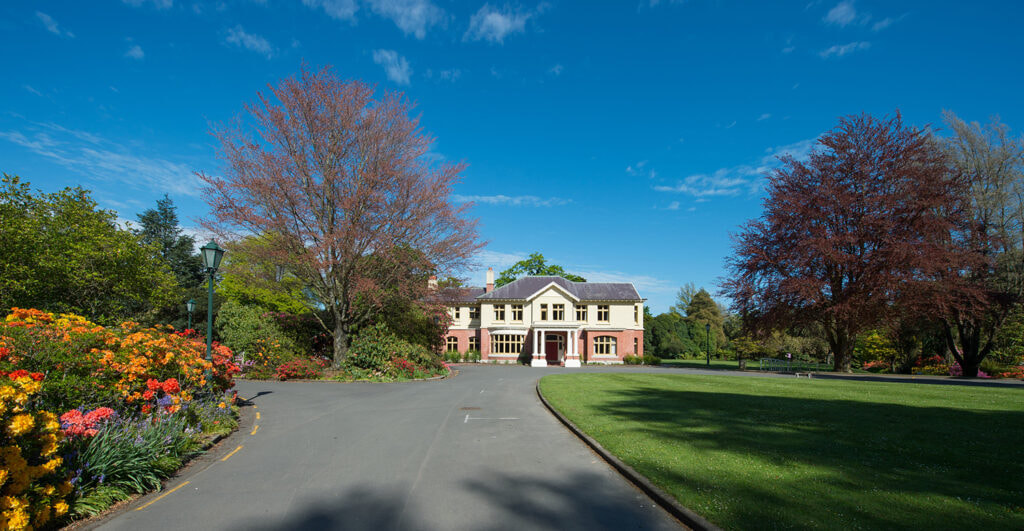
|
|
Venue: Rātā Building (Engineering Core)
University of Canterbury Campus map - click here 29 November
|
Programme Overview - click here
|
|
Edward Aspinall is a professor and head of the Department of Political and Social Change, Coral Bell School of Asia Pacific Affairs, Australian National University. He is a specialist in the politics of Southeast Asia, especially Indonesia. He has authored four books: Opposing Suharto: Compromise, Resistance and Regime Change in Indonesia (2005), Islam and Nation: Separatist Rebellion in Aceh, Indonesia (2009), Democracy for Sale: Elections, Clientelism and the State in Indonesia (2019, with Ward Berenschot) and Mobilizing for Elections: Patronage and Political Networks in Southeast Asia (2022, with Meredith L. Weiss, Allen Hicken and Paul D. Hutchcroft) and co-edited a further ten, including Electoral Dynamics in Indonesia: Money Politics, Patronage and Clientelism at the Grassroots (2016). His most recent research projects focus on clientelism, village politics, and urban machine politics across Southeast Asia.
|
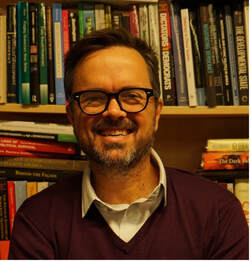
He was president of the Asian Studies Association of Australia in 2019-2020 and with Melissa Crouch authored the 2022 ASAA report, Australia's Asia Education Imperative: Trends in the Study of Asia and Pathways for the Future. He is co-series editor of the Cambridge University Press Southeast Asian Politics and Society Elements series and of the ASAA’s Southeast Asia Publication Series, published by NUS Press.
|
|
Jolan Hsieh is a professor in the Department of Ethnic Relations and Cultures and director of the Center for International Indigenous Affairs, College of Indigenous Studies, National Dong Hwa University (NDHU). She is a Taiwanese indigenous scholar from the Siraya Nation and her research focuses on law and society, human rights, identity politics, global indigenous studies, gender/ethnicity/class, environmental justice, and indigenous research and ethics. Jolan’s professional services include adviser to the Presidential Office Indigenous Historical Justice and Transnational Justice Committee, convener of the Reconciliation Subcommittee, the Executive Yuan Indigenous Peoples Basic Law Working Committee, and the Council for Indigenous Peoples Affairs PingPu Peoples Affairs Working Committee. She has served as co-chair for the World Indigenous Nations Higher Education Consortium since 2019. As an indigenous activist and scholar, Jolan is also active in indigenous language and cultural revitalization movements. She has collaborated internationally with many educational institutions with an indigenous research focus including recent partnerships with institutions in Aotearoa New Zealand, Australia, Canada, US, Sami Land and Japan.
|
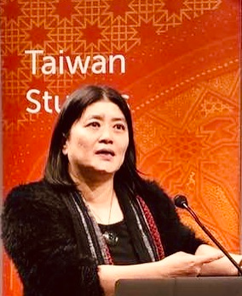
Jolan’s book publications include Collective Rights of Indigenous Peoples: Identity-Based Movement of Plains Indigenous in Taiwan (Routledge, 2006/2010); In-between: Indigenous Research and Activism as Ceremonial Journey (in Chinese, 2017); and more recently as co-editor, Indigenous Reconciliation in Contemporary Taiwan: From Stigma to Hope (Routledge, 2023).
|
|
Sita Venkateswar is Associate Professor in the Social Anthropology programme at Massey University, Aotearoa/New Zealand. She received her Ph.D. in Cultural Anthropology from Rutgers University in 1997. Her ethnography Development and Ethnocide: Colonial Practices in the Andaman Islands (2004) is based on her Ph.D. fieldwork in the Andaman Islands from 1989 to 1992 funded by the National Science Foundation Dissertation Improvement Grant. Her co-edited book, The Politics of Indigeneity: Dialogues and Reflections on Indigenous Activism (2011) is published by Zed Books. In 2016 she co-edited with Sekhar Bandyopadhyay a third book Globalisation and the Challenges of Development in Contemporary India, Springer-Verlag.
|
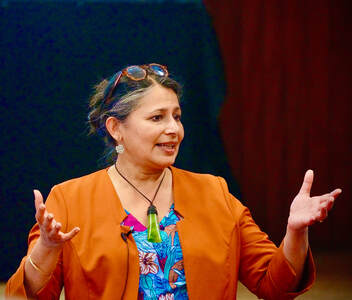
Her current project with Vicky Walters explores diversity, everyday social relations and the socio-cultural landscapes inhabited by the Indian Diaspora in Aotearoa New Zealand
|
|
Phillip Gibson is a former senior New Zealand diplomat. In a career spanning several decades, he has served as Ambassador to Japan, Indonesia and Thailand – in the latter role also accredited to Vietnam, Cambodia, Laos and Myanmar. He was New Zealand’s first Ambassador to ASEAN. He has held a range of other senior positions in New Zealand and internationally including: Chief Executive of the Asia 2000 Foundation (now Asia New Zealand Foundation); Special Envoy for Disaster Risk Management, in which capacity he led New Zealand’s participation in numerous United Nations and Asia/Pacific DRM Conferences; Commissioner General leading New Zealand’s award winning participation in the Japan 2005 and Shanghai 2010 World Expos. Earlier in his diplomatic career he was posted to Rome, Manila and to the United Nations in New York, where he served on the Economic and Social Council, UNDP’s Governing Council and as Vice-Chairman of the General Assembly’s Economic Committee. Both as CEO of the Asia/New Zealand Foundation and in his Ambassadorial and other roles he was actively involved in Asia/Pacific Think Tank networks and early Track Two initiatives including those on preventive diplomacy and regional security, which led to the establishment of the ASEAN Regional Forum and East Asia Summit.
|
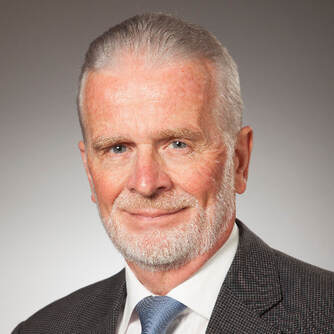
Phillip was educated at Otago Boys’ High School in Dunedin, of which he was Dux and Best All Round Pupil.An honours graduate and Rhodes Scholar nominee from Otago University, where he also gained prizes for scholarship in Latin, his professional education has included Senior Executive programmes at Thailand’s Chulalongkorn University and the National University of Singapore involving the Wharton, Kellogg and Stanford Business Schools. In 2017 Phillip was awarded the Order of the Rising Sun, Gold and Silver Star for his contribution to Japan/New Zealand relations. He is presently affiliated with the University of Canterbury as an Adjunct Senior Fellow.
|

Ōtautahi Christchurch is the largest city on the South Island of New Zealand, with nearby beaches and easy access to the Southern Alps. It is a transportation hub for the South Island, with terminals for buses and trains, and an international airport. Nearby attractions include whale watching, swimming with dolphins, wine trails, tramping, museums, and the International Antarctic Centre.
|

Also known as the Garden City, Christchurch is the most scenic city in New Zealand with its expansive parks and suburbs of well-tended gardens.
The central city is filled with cutting-edge architecture alongside some of the oldest buildings in New Zealand. The Avon river intersects the city, bringing a natural landscape to the urban environment.
|

The wider Canterbury region offers everything from lush vineyards and wild coastlines to sky-piercing mountains and pristine glacial lakes. Canterbury is a region of remarkable contrasts and a haven for those seeking incredible scenery and adventure. Find out more here. For general information on destinations and travel in New Zealand, visit iSITE New Zealand.
|
|
University of Canterbury
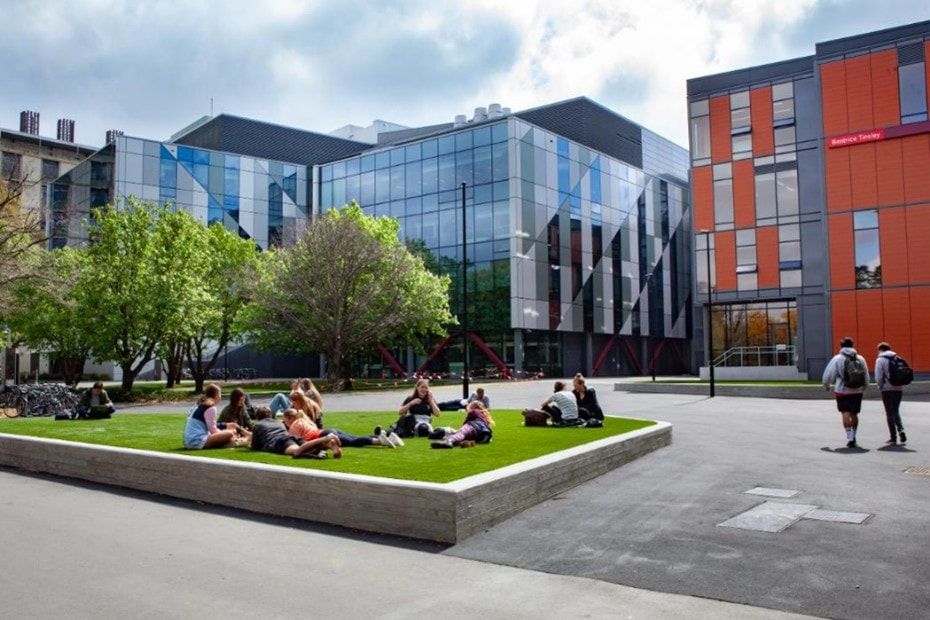
In 2023, the University of Canterbury Te Whare Wānanga o Waitaha celebrates the 150th anniversary of its founding. Join us in celebrating this milestone with a series of events, together with our treaty partner, Ngāi Tūahuriri, and our Pacific and wider UC communities. Here is the campus map. Getting Here The University of Canterbury is located only five kilometres away from the Christchurch International Airport. There are various transport options available for visitors at the Airport including taxis, shuttles and buses. |
|
|
Conference Co-conveners
Naimah Talib and Chia-rong Wu Conference Committee Arindam Basu, Susan Bouterey, Jane Buckingham, Richard Bullen, James Ockey, Alistair Swale, Wei Teng, Shinya Uekusa Contact Email: [email protected] |

|

|
PROMOTING KNOWLEDGE ABOUT ASIAN CULTURE, HISTORY AND SOCIETYABOUT US | MEMBERSHIP | JOURNAL | NEWS AND EVENTS | CONFERENCES | RESOURCES | AWARDS & GRANTS | BLOG
|